Are Luggage Lockers In Paris Safe? The Full Guide
A claim cap of EUR 3,000, a seven-day claim window, and X-rayed airport counters build a real picture of how safe Paris luggage storage really is.
Short answer
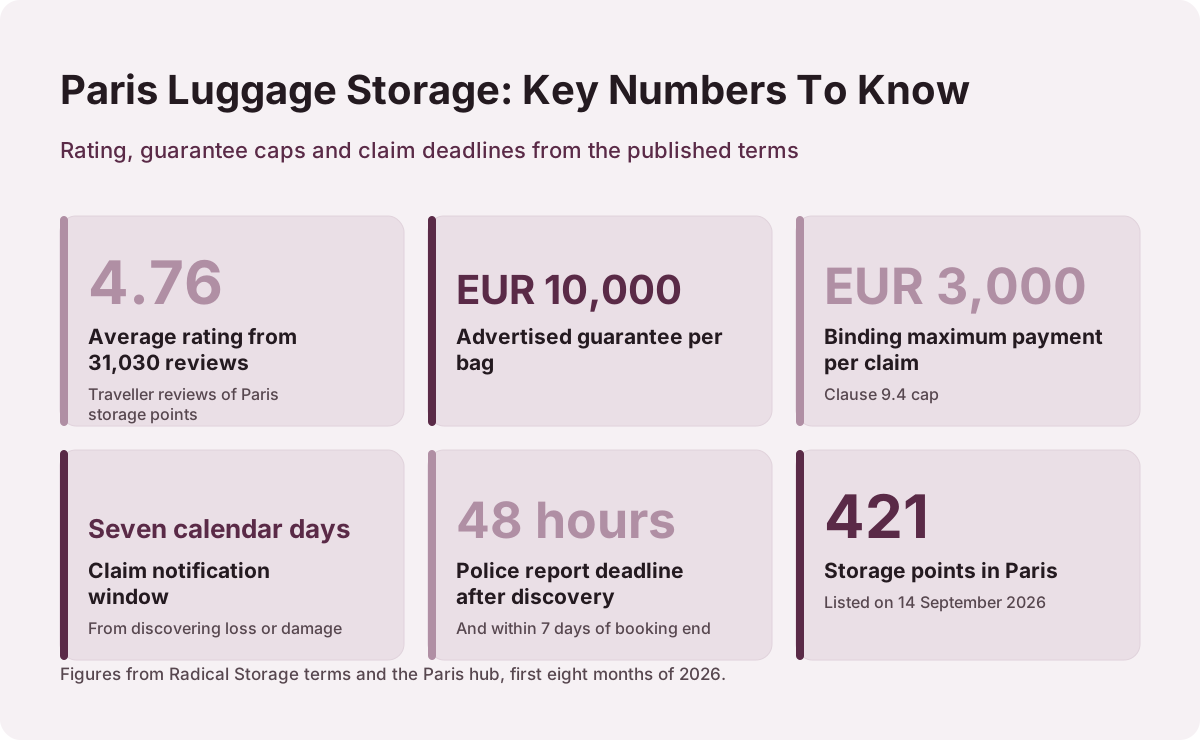
Luggage storage in Paris through the Radical Storage network is safe: each booking comes with a EUR 10,000 guarantee (capped at EUR 3,000 per claim), partners hold bags behind a counter, and a verified rating of 4.76 from 31,030 reviews. The guarantee is not insurance, and you must report a claim within seven days, but the network's 421 Paris points provide a consistent standard of care.
In the first eight months of 2026, 31,030 travellers reviewed Radical Storage’s Paris luggage storage points and gave the network an average score of 4.76 out of 5. That number is the starting point for any honest answer to “are luggage lockers in Paris safe?” because when you use Luggage Storage in Paris, you do not put your suitcase into a coin-operated locker and walk away. You hand it to a human being behind a counter in a shop, hotel or café. The guarantee that backs up that handover matters more than the star rating, and it contains rules most travellers never read until they need them.
What The Real Risk Is: Lost Bags And Petty Theft In Paris
Paris does not publish a luggage-theft rate by storage method, but the rules that exist and the sanctions that apply are unusually clear. In 2025 France raised the fine for abandoning a bag in a station to up to EUR 1,500 for a deliberate act, and any storage operator in France must keep a bag for 30 days after the booking period ends. Combining those two facts tells you more about risk than an anecdote does.
No primary police source publishes a count of bags stolen from Paris luggage storage points, hotel luggage rooms or station lockers in 2025 or 2026. What is published is a dense set of legal, contractual and procedural safeguards that did not exist in the piecemeal coin-locker era. That means the safety question can be answered from the documents themselves: the guarantee terms, the claim deadlines, the identity checks at airport left-luggage desks and the penalty for unattended bags that incentivises every operator to know exactly where every suitcase is at all times.
The French law of 28 April 2025 created three tiers of fixed penalty for abandoned baggage on SNCF, RATP and other public carriers: a base EUR 72 for accidental abandonment (rising to EUR 450), EUR 150 for a bag with no label (rising to EUR 750) and EUR 180 for manifest voluntary abandonment (rising to EUR 1,500), as reported by MoneyVox on 16 May 2025. A free anonymous QR-code luggage label that carries the owner’s name and phone number is now permanently available in SNCF stations after a joint SNCF and RATP trial. The same law applies across the transport network, and it turns the old instinct of “I will just leave my bag here for an hour” into a fineable act. When a storage point takes your suitcase, it gives you a legal alternative to risking that fine.
How Radical Storage’s Guarantee Actually Works
The headline says “EUR 10,000 guarantee per bag”, but the Terms and Conditions cap the maximum payment at EUR 3,000 per claim, explicitly state the Guarantee is not insurance, and reserve the right to withdraw it at any time before a claim is made. Valuation is at current market value minus wear and tear, and you must notify Radical Storage within seven calendar days of discovering the loss or damage.
Every page on the Radical Storage Paris hub carries the EUR 10,000 figure. It is the largest number any traveller sees before they book, and it is the number competitors quote in their own comparison tables. But the real binding document is Radical Storage’s Terms and Conditions, and clause 9.2.2 states: “The Guarantee … is not an offer to insure your property and does not constitute a contract of insurance.” Clause 9.4 caps the company’s liability at “a maximum of EUR 3000 per claim.” Clause 9.2.1 adds that the company may withdraw or amend the guarantee at any time before a claim is made. So the EUR 10,000 is a marketing ceiling, and the EUR 3,000 is the enforceable number that matters in practice.
Clause 9.4 also sets the valuation basis: items are appraised at “their current market value minus wear and tear. The sentimental value of items shall not be relevant to their valuation.” That means a laptop bought a few years ago might be valued at significantly less than its original price, and the family photographs on its drive add nothing to the claim. The exclusions in clause 9.8 are equally sharp. No claim is payable unless you submitted a signed itemised list with estimated values at the time of drop-off. Items “damaged in transition” while being transported, stored or packed are excluded, as are items not “packed reasonably safely and securely.” Theft or criminal damage not reported to the police within 48 hours of discovery, and in any event within seven days of the end of the booking period, is also excluded.
These clauses are not hidden in fine print; they are published on the same terms page that governs every booking. Long-form reading of that page is how you learn that a driving licence is not accepted at the airport desk (only a passport or national ID card), that the airport operator charges a 48-hour late-collection fee after the 30-day legal maximum, and that a seven-day claim window starts ticking from the moment you discover a loss, not from the end of the booking. How Radical Storage works in Paris from booking to collection is worth understanding before you rely on the guarantee. The gap between the marketing number and the contractual number is less interesting than the fact that the contractual number exists, that its conditions are spelled out, and that a traveller who reads them before booking is never surprised by them afterwards.
The Claim Process Step By Step
If something goes wrong, you notify Radical Storage by email within seven days, providing evidence of identity, address and the loss or damage. The company responds within three working days with one of three verdicts: Claim Invalid, Claim Pending, or Claim Eligible. An Eligible claim gives you ten days to complete the steps in clause 9.6, and the payout is capped at EUR 3,000.
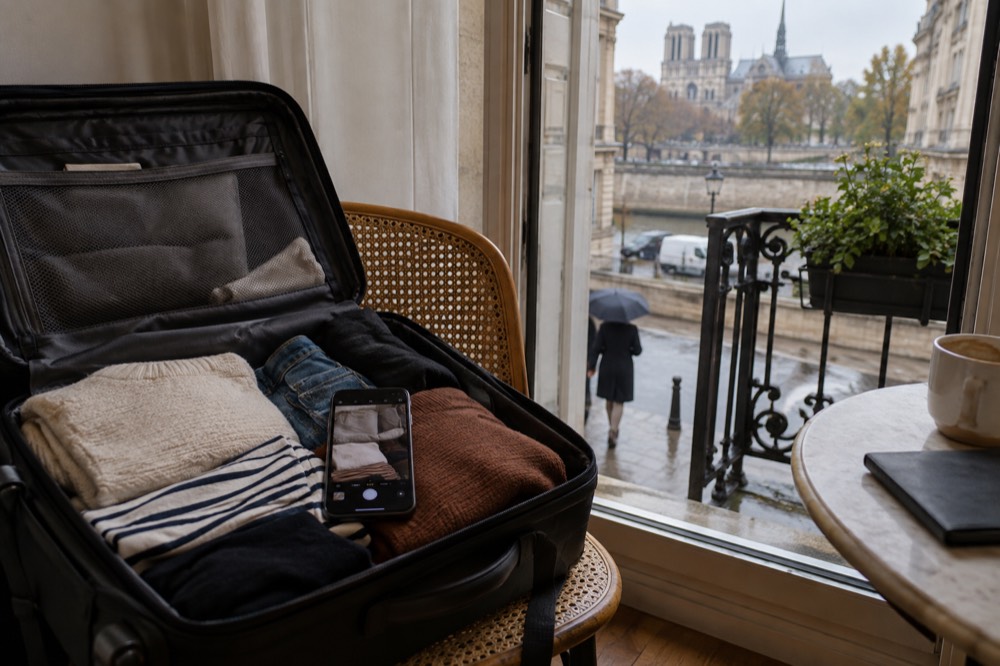
The procedure is set out in clauses 9.5 and 9.6 of the Terms and Conditions, and it is one of the few published luggage-storage claim processes anywhere. A “Claim Invalid” response means the notification arrived late, evidence was missing or the item was excluded. A “Claim Pending” holds the case open while a stated course of action runs to a conclusion. A “Claim Eligible” triggers a ten-day window in which the claimant must provide receipts, proof of ownership and a signed final schedule of loss. If any deadline is missed, clause 9.5 states the guarantee is invalid.
The fine print also governs who the claim is ultimately against. Radical Storage’s partners are independent businesses, not employees, and clause 9.3 explains that the company may pursue the partner for reimbursement after paying a claim. In practice, that means the partner’s own insurance and business licence sit behind every bag, and a partner that mishandles a suitcase risks losing its place on the network.
From a traveller’s standpoint, the practical takeaway is not that the guarantee is weak. It is that the guarantee works only if you do three things before you walk away from the counter: photograph the bag and its contents, write a short note of any high-value items with their estimated values, and confirm the opening hours on your booking confirmation. Those steps take a couple of minutes and turn a speculative “something might have happened” into a documented trail.
What Radical Storage Partners Do To Keep Your Bag Safe
Partners keep bags behind a counter rather than in a public locker bay, record check-in and check-out times, and operate regular shop or hotel hours, typically from early morning until around midnight. The network publishes the address and phone number of each point, and the platform’s cancellation policy means you can change your booking without penalty if the hours or location do not suit you.
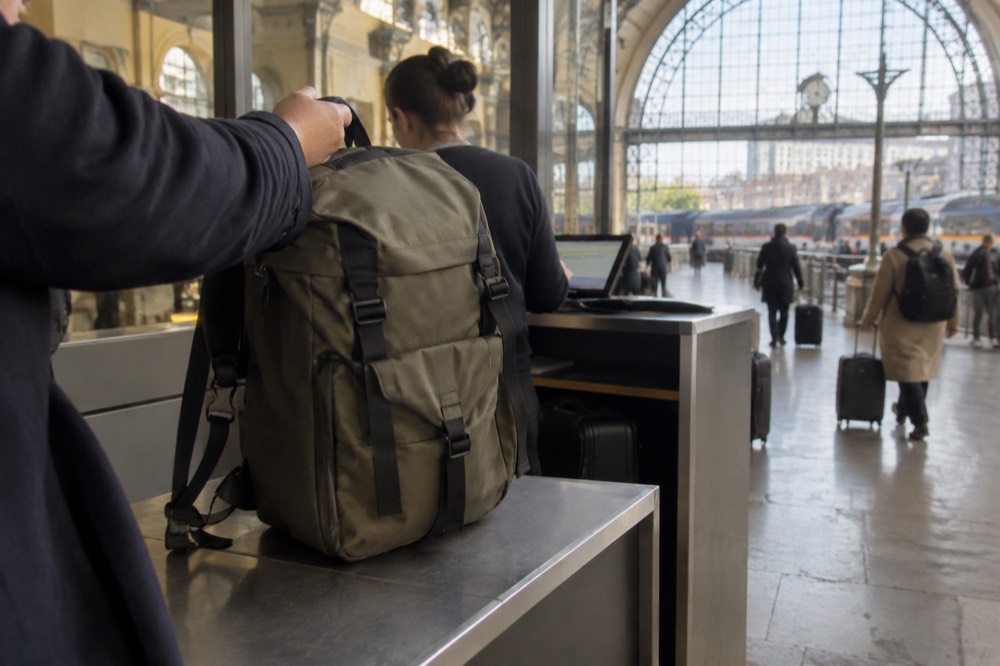
On 14 September 2026, the Paris page listed 421 storage points spread across 370 location pages. A sample of eight cards that day showed: Gare du Nord Grandes Lignes opens 08:30–20:00, Montparnasse 07:00–00:00, Paris Lyon Train Station 10:00–20:00, Saint-Lazare Train Station 08:30–00:00, and République-Magenta 10:00–20:00. One Gare de Lyon hotel point displayed “Closed.” None promised 24/7 access, despite the words “24/7” appearing in many area page titles.
The lack of round-the-clock access is the single most misunderstood safety feature. A partner that closes at 20:00 is a partner whose doors are locked for the night, with nobody entering or leaving until the morning. That is less convenient than a 24-hour locker bank, but it is also more secure. A suitcase in a locked shop is not accessible to the public, and the partner’s own insurance, business licence and reputation sit behind it.
At Gare du Nord, the highest-traffic Paris station, the Radical Storage point holds a 4.75 rating from 2,937 reviews across 10 published locations, with 16 total points in the area. That volume of feedback gives each point a measurable track record that a coin-operated locker simply never accrues. Station luggage storage across Paris varies widely in facilities, and comparing the real hours and ratings is the safest way to pick a point.
How Safe Are Official SNCF Station Consignes?
SNCF left-luggage offices use X-ray screening in some stations, publish locker dimensions, and operate in staffed or automated bays with fixed hours. But only five mainline Paris stations have an in-station consigne, and capacity is limited enough that SNCF’s own pages warn lockers can be full and temporarily closed.
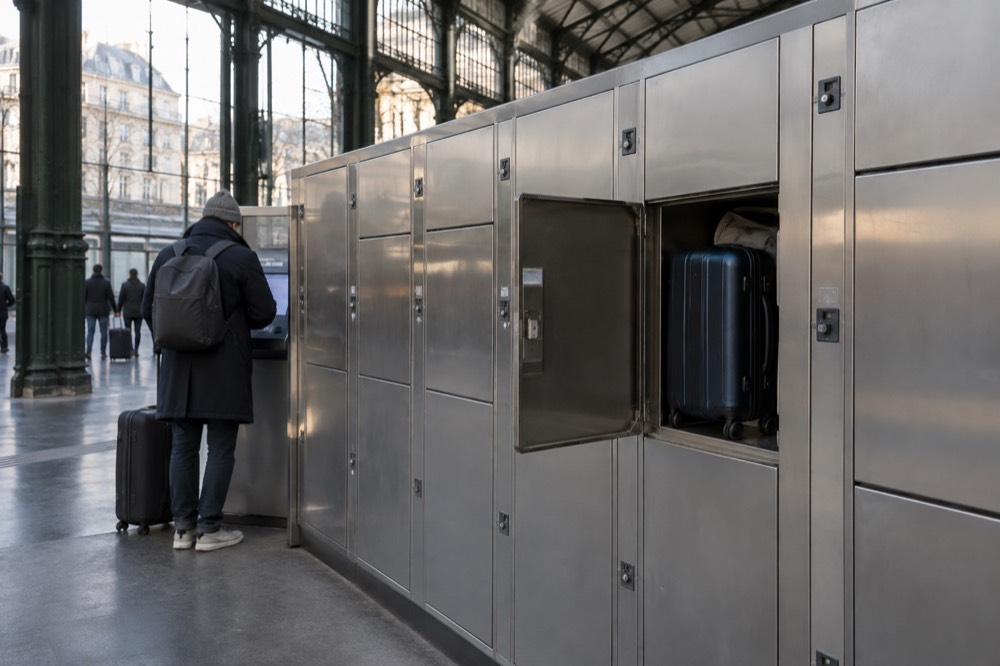
The official SNCF consigne is the oldest luggage-storage system in Paris and the one travellers often assume is the safest because it is physically inside a railway station. The reality is more specific. At Gare de Lyon, the lockers are in Hall 3, level -1, next to the Rue de Bercy entrance, open 06:15–22:00 daily. They are automated lockers with dimensions of 433 x 347 x 824 mm for a small, 591 x 347 x 824 mm for a medium and 908 x 519 x 824 mm for a large. Payment is cash only, and the station is in the middle of a refit, announced for September 2026, to install card-only lockers. At Gare de l’Est, the lockers accept coins only, open 07:30–22:30, on level -1 next to PAUL. At Gare Montparnasse, payment is by bank card only, open 07:00–22:00, near track 24. At Gare d’Austerlitz, the lockers are cash-only, open 07:00–23:30, in the Services Area opposite tracks 1–2.
These lockers are not screened with an X-ray machine at every station. SNCF’s own unattended-baggage page describes a 19-minute average response time when a bag is left unattended, and notes that 35,500 trains were delayed or cancelled in 2022 due to abandoned items. The Vigipirate protocol in stations means a bag left loose can trigger a security perimeter, sniffer dogs and a station evacuation. An official consigne locker avoids that risk entirely.
Saint-Lazare and Bercy have no in-station consigne at all. SNCF’s own June 2026 tender placed them on the list of stations to be served by an off-site partner from 30 September 2026. For those stations, a nearby Radical Storage point, such as the one at Saint-Lazare with a 4.79 rating from 2,305 reviews, is the only realistically bookable option, and many travellers will find that the network’s EUR 3,000-per-claim guarantee offers a clearer financial backstop than anything published on an SNCF locker bay. Choosing between a consigne and a storage network comes down to station, hours and the value of a guaranteed booking.
The Penalty For Unattended Bags In French Stations
Leaving a bag unattended in a Paris station is not a minor by-law infraction. Since April 2025, it carries a fixed penalty that starts at EUR 72 for an innocent mistake and reaches EUR 1,500 for deliberate abandonment. The same law makes luggage labelling compulsory, and a free anonymous QR-code tag is available in stations.
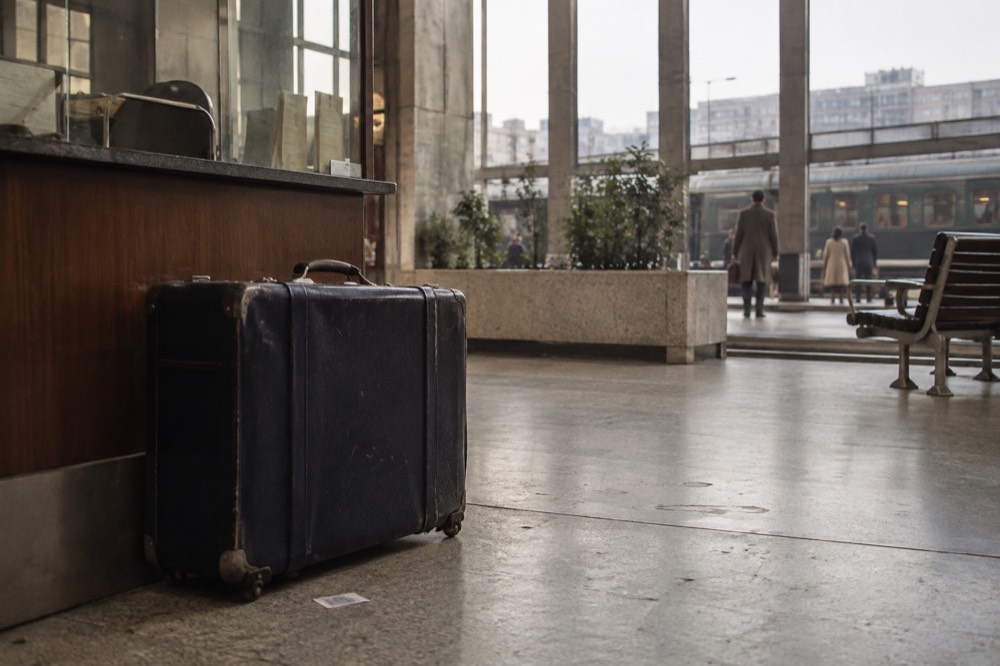
The law of 28 April 2025 applies to SNCF, RATP and other public transport operators. An involuntary abandonment, such as forgetting a rucksack on a platform while rushing for a train, attracts a base fine of EUR 72, rising to EUR 450 if pursued. A bag left without a label attracts EUR 150, rising to EUR 750. A manifest voluntary abandonment, where the intention to discard the bag is clear, is EUR 180, rising to EUR 1,500. SNCF’s own data puts the average disruption from one unattended bag at 19 minutes and 35,500 affected trains in 2022, a statistic the law is designed to reduce.
The labelling rule is the most actionable part. Every bag carried onto a train or left in a station locker should carry the free QR-code label that contains the owner’s surname, first name and phone number. The system is permanent after a joint SNCF and RATP trial, and a traveller who skips it because they are in a hurry risks a EUR 750 fine if the bag is lost or mislaid.
None of these penalties apply to a bag left with a commercial luggage-storage service. The booking reference and the operator’s own records replace the need for a label, and the sealed shop behind a counter takes the bag out of the unattended-baggage protocol entirely. For a traveller with a suitcase and a three-hour gap between a hotel checkout and a train, the EUR 3.90 per bag per day (plus the EUR 1.99 per-bag checkout fee) for a Radical Storage point is not just a convenience. It is an explicit legal alternative to an act that carries a fine of up to EUR 1,500.
Safety At Airports And Museums: Lockers vs Network Points
Paris airport left-luggage desks run an identity check requiring a passport or national ID card, X-ray every bag, then scan and store it. Most museums forbid full-size suitcases entirely and offer free but limited-capacity lockers for cabin-sized items, with the venue disclaiming liability for valuables.
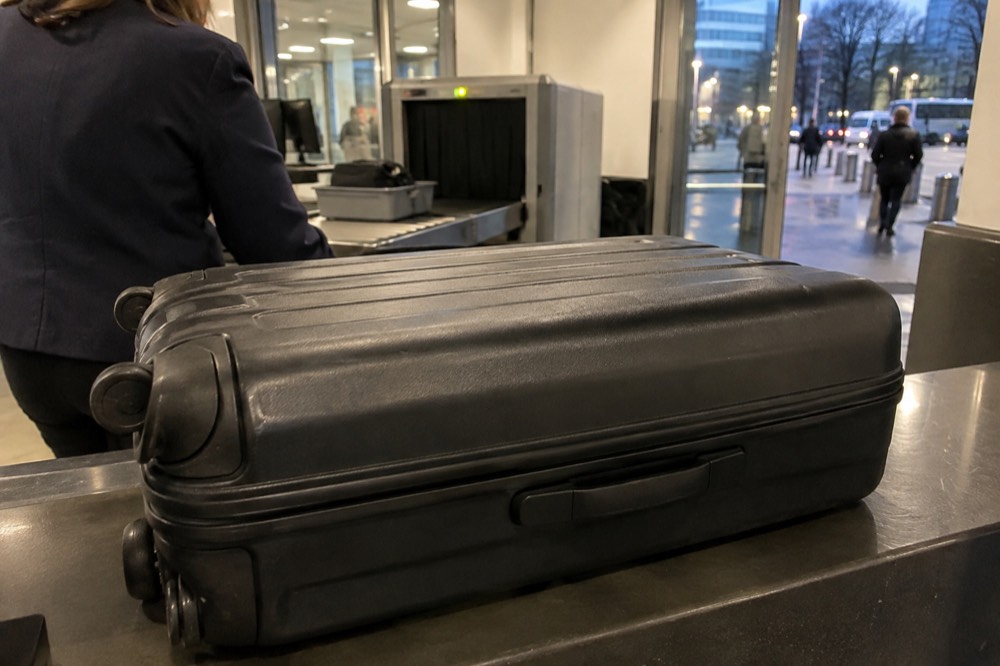
At Charles de Gaulle and Orly, the operator Bagages du Monde processes bags through a three-step security procedure: an identity check accepting only a passport or national ID card, an X-ray scan, and an electronic scan into storage. The published hours are 07:00–21:00, seven days a week. A driving licence is refused, and the prohibited-items list covers weapons, flammable materials, live animals and fresh produce. The same operator also offers an optional paid insurance uplift of EUR 5 per EUR 500 of value, reinforced packaging at EUR 10 per bag and a priority service at EUR 15. This is the only published “airport-grade” luggage security in Paris, and it is located at the airport, not in the city.
In central Paris, museums impose a much simpler model. The Louvre permits only bags up to 55 x 35 x 20 cm, stores them in free self-service lockers under the Pyramid, and explicitly disclaims responsibility for valuables. The Musée d’Orsay’s 2021 Visiting Rules cap items at 56 x 45 x 25 cm, with a free cloakroom subject to capacity. The Eiffel Tower, Arc de Triomphe and Catacombs have no cloakroom at all. The Catacombs publish the strictest limit: bags over 40 x 30 x 20 cm are banned, and the exit is 700 metres from the entrance, so there is no physical space for a left-luggage room. At the Conciergerie, all bags are screened through X-ray machines, and bulky luggage is explicitly prohibited, though the monument’s own pages do not confirm whether a cloakroom exists.
The takeaway for a traveller with a full-size suitcase is simple: the safest museum locker cannot accept the bag at all. A Radical Storage point 300 metres from the entrance, booked in advance and backed by a EUR 3,000-per-claim guarantee, is the only option that lets you enter the monument without leaving a bag on the street. Paris museum and landmark bag rules spell out where you can and cannot take a suitcase, and the list is shorter than most travellers expect.
Practical Steps To Keep Your Bag Safe In Paris
Photograph your bag and its contents before handing it over, write a short valued list, check the storage point’s opening hours on your booking confirmation, and use the free SNCF QR-code luggage label for any bag you carry on public transport. These four steps eliminate the most common reasons a claim is refused and the most common reasons a bag is lost.
The seven-day claim window in Radical Storage’s terms means the clock starts when you notice something is wrong, not when you reach your next destination. That makes a post-collection check of your bag, done outside the storage point, more useful than a hurried repacking. If you discover a missing item after you have left the partner’s premises, you have seven days to email Radical Storage with your booking reference, a description of the loss, and any supporting photographs. The terms require cooperation with the investigation, so holding on to the booking confirmation and the timestamped photo is essential.
The free SNCF luggage label, available at major station information desks, uses a QR code rather than a handwritten tag. The code stores a surname, first name and phone number, no address, no booking reference. Attaching it to every bag you carry onto a train or leave in an SNCF locker satisfies the April 2025 labelling law and makes your bag instantly identifiable if it is found. The label costs nothing, and the penalty for not having one is EUR 750 at its maximum.
For valuables, Radical Storage’s terms exclude items not packed “reasonably safely and securely.” A laptop in a padded sleeve inside a locked suitcase meets a higher standard than a loose tablet in a shopping bag. The same clause 9.8.5 that demands safe packing also excludes damage that occurs during transport and storage, so fragile items should travel in hard-shell cases. The airport operator’s optional insurance uplift at EUR 5 per EUR 500 of value is the only published Paris option that lets a traveller raise the cover limit at the point of storage, and it is only available at CDG and Orly, not in the city.
Common Questions About Luggage Storage Safety In Paris
Are luggage lockers in Paris safe?
Yes, when they are part of a network like Radical Storage. The booking ties your bag to a specific, rated shop or hotel with published hours, a digital trail and a financial guarantee of up to EUR 3,000 per claim. Coin-operated public lockers in Paris are rare, but the official SNCF station consignes also offer secure, staffed or automated bays in five mainline stations.
Is luggage storage safe in Paris?
The safety record of Radical Storage’s Paris network is supported by 31,030 reviews scoring 4.76 out of 5, a binding per-claim cap of EUR 3,000 and a seven-day claim notification window. No Paris theft statistics specific to luggage storage points are published, but the legal and contractual protections that exist are heavier than those for a bag left in a café or a station bench.
Are luggage lockers safe in Paris?
Yes, especially when you compare them to the alternatives. An unattended bag in a station can trigger a security alert and a fine of up to EUR 1,500 under French law. A museum locker often disclaims liability and rejects suitcases over cabin size. A Radical Storage point holds your bag behind a counter in a business with real opening hours, insurance and thousands of previous reviews.
What do reviewers on Reddit and other forums say about Paris bag storage?
Forum reports are anecdotal and unverifiable, but the themes that appear repeatedly are that station lockers can be full, that some partners close earlier than advertised, and that a pre-booked spot is easier than walking around with a case. The 31,030 reviews on the Radical Storage Paris page offer a larger, date-stamped audit than any single forum thread.
What should I do if something goes wrong with my luggage storage in Paris?
Immediately photograph any damage or missing items, note the time and the partner’s address, and email Radical Storage within seven calendar days. Attach the itemised list you prepared when you dropped off the bag. The Terms require you to report theft to the police within 48 hours of discovery, so file a report at the nearest commissariat before you leave Paris.