Does The Eiffel Tower Offer Luggage Storage?
No, the Eiffel Tower has no cloakroom, no lockers and no left-luggage office. Here is what the security check actually enforces, and the 9 storage points that work instead.
Does The Eiffel Tower Offer Luggage Storage?
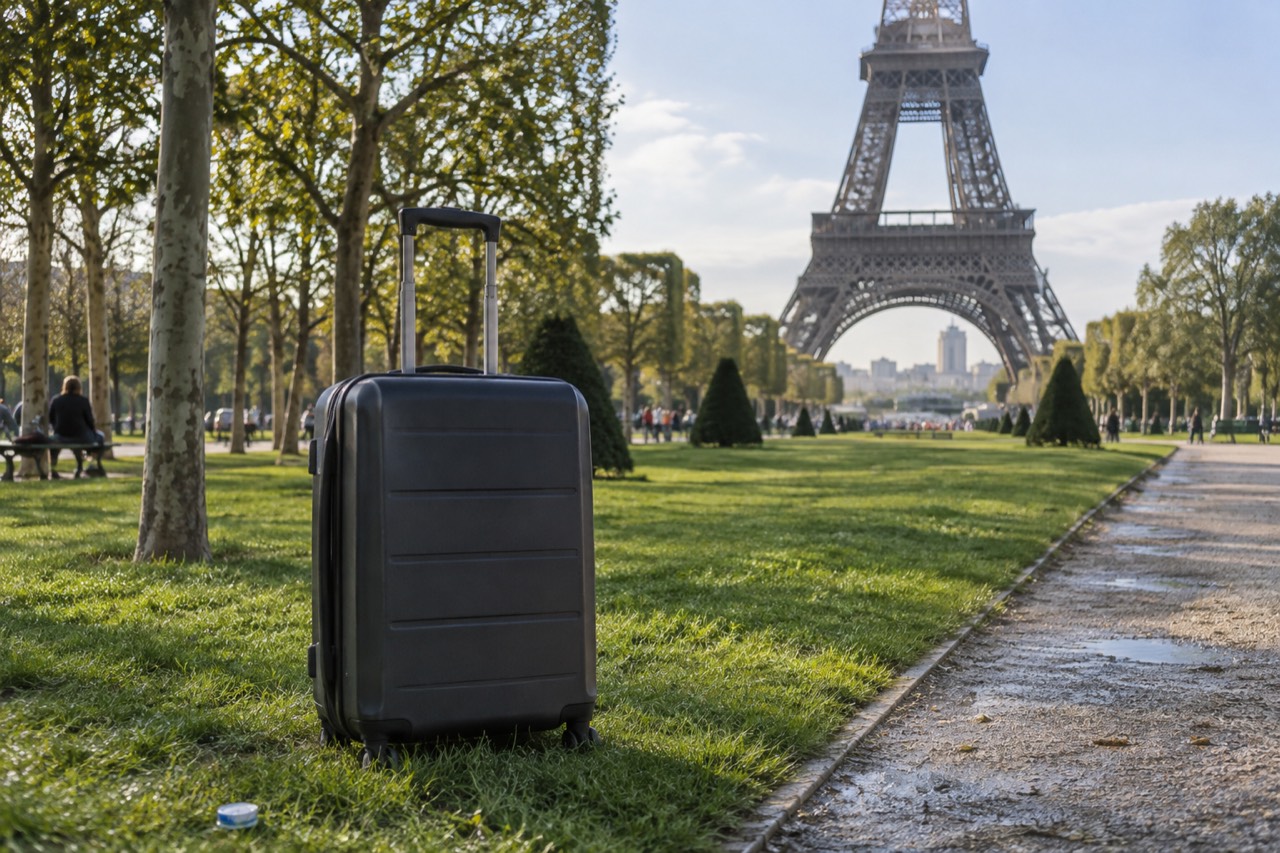
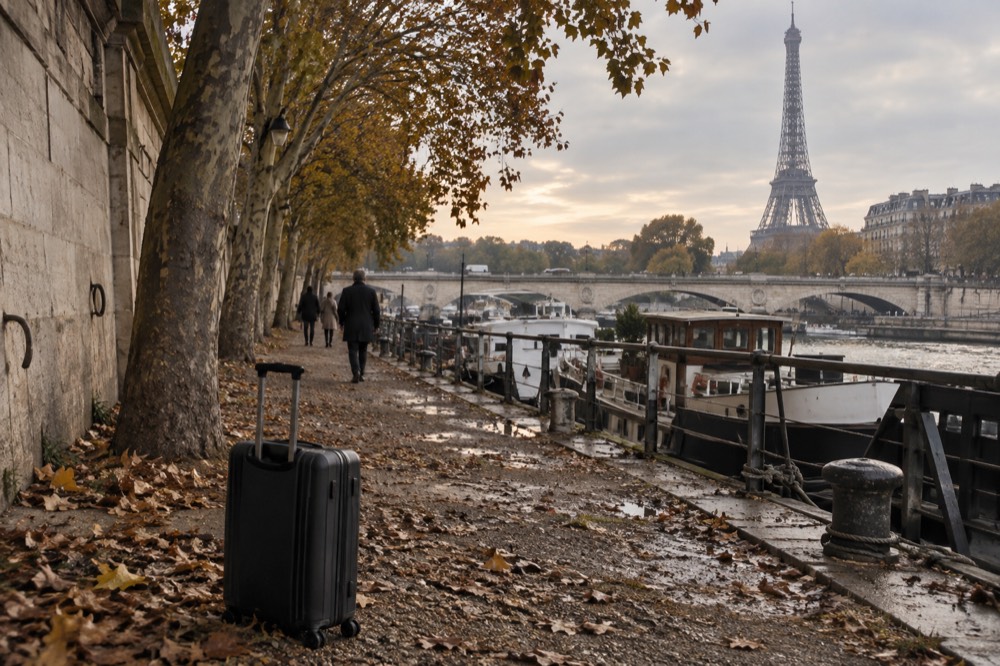
No. The Eiffel Tower has no left-luggage office, no cloakroom and no lockers, in the monument or near it, and the tower's own visitor information states this directly. There is nowhere on site to check a suitcase, a large bag or anything that fails the size gauge at security. The working answer is a storage point within walking distance of the Champ de Mars, booked before you arrive.
The tower's operator is unusually clear on this point. Its frequently asked questions say there is no left-luggage office at the Eiffel Tower and no cloakroom, and its practical visitor guide adds that there are no luggage lockers, storage facilities or cloakrooms in or near the Eiffel Tower. That is not a hedge or a translation artefact. It is the operator telling you, in two separate places on its own site, that the building offers nothing for your bag.
This matters more here than at almost any other Paris landmark, because the tower is the one sight people most often fit into the awkward gap between hotel checkout and a night flight, or between dropping a rental flat and boarding a evening train. You arrive with a suitcase, the tower has nowhere for it, and the security perimeter will not let it through. The rest of this article is about what actually happens at the security check, what the nearby storage points cost, and how the honest alternatives compare, including the official station lockers that beat the networks on price for short stops.
The nearest cluster of bookable storage points around the Champ de Mars is the practical answer for most travellers, and it is worth seeing the three options side by side before reading the detail:
Why The Tower Has No Cloakroom At All
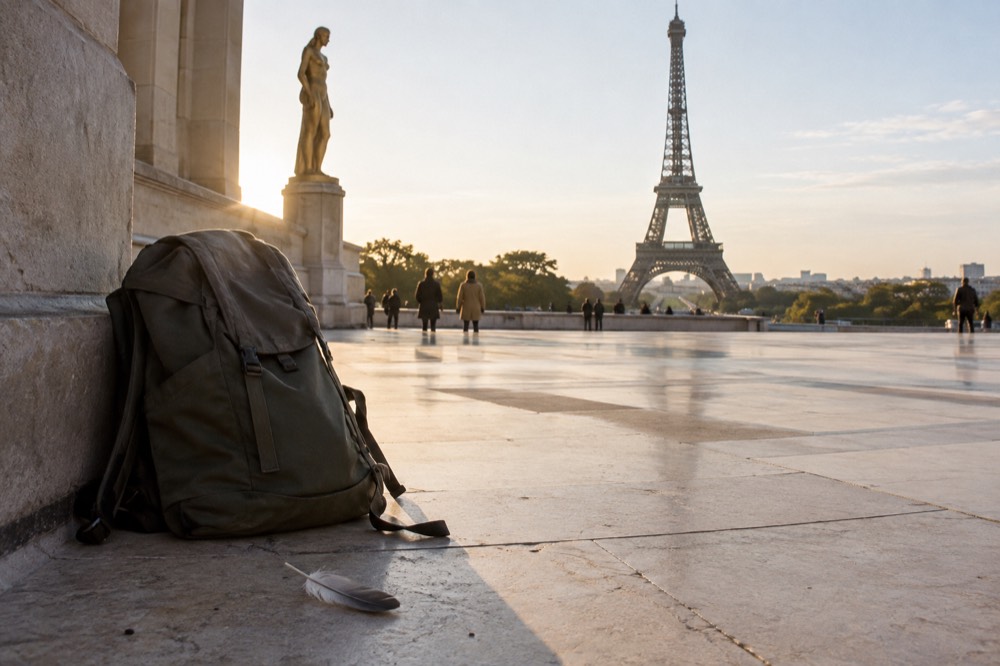
The Eiffel Tower operates under the French Vigipirate security plan, which is why suitcases and large bags are refused at the perimeter and why no cloakroom exists to absorb them. A venue that cannot store bags behind its security line has no reason to build a cloakroom, and the tower never did. The result is a hard rule with no on-site workaround, only alternatives outside the monument.
Vigipirate is the standing French national security posture, and it shapes bag policy at every major monument in Paris. At the tower it means every visitor passes a security screening before reaching the pillars, and anything that looks like travel luggage is turned away there rather than inside. The tower's own pages frame it exactly this way: no cloakroom, no lockers, no storage, and a size gauge at the checkpoints that decides what gets through.
The tower is not singling luggage out. The Palais Garnier bans suitcases and travel bags under the same plan and keeps its cloakroom closed during daytime visits, opening it only for performances. The Catacombs refuse anything larger than 40 x 30 x 20 cm and have no cloakroom either, for the practical reason that the exit is 700 metres from the entrance. The Louvre allows small items into free lockers under the Pyramid but caps bags at 55 x 35 x 20 cm and disclaims responsibility for valuables left in them. Across every major Paris venue checked in this site's research, not one accepts a full-size suitcase. The tower is simply the strictest case of a city-wide rule.
That city-wide rule is why luggage storage exists as a product in Paris at the scale it does. When no monument will hold your bag and no hotel is contractually obliged to hold it after checkout, a network of shops, hotels and cafes holding bags behind a counter for a flat daily rate fills the gap. Around the Champ de Mars that network is Radical Storage, whose points this site lists without owning or operating any of them, and whose terms matter enough that this guide sets them out honestly further down.
One point of honesty before the practicalities: this site does not own or operate any storage point. Every location recommended here is a Radical Storage partner location, a real shop or hotel whose counter takes bags, and the network's guarantee, not this site, is what stands behind a booking. Naming the network is the least a reader handing a stranger their suitcase is entitled to.
What The Security Check Actually Enforces
Security at the Eiffel Tower uses a physical size gauge rather than a published centimetre limit, so there is no official maximum bag size in writing anywhere. If your bag does not fit the gauge at the checkpoint, it does not go in, and staff will not hold it for you. A day pack usually passes; a cabin suitcase, a wheelie bag or a large backpack usually does not.
The absence of a published figure is the detail most third-party pages get wrong. Blog after blog quotes a centimetre limit for the Eiffel Tower, but the tower's own material never gives one. What it confirms instead is that a luggage sizer indicating the maximum size is available to visitors at the security checks, and that any luggage exceeding that size will not be accepted. The gauge is the rule. Nobody outside the checkpoint can tell you in advance exactly where its line sits, and any blog that prints a number for it is guessing.
What the gauge means in practice is a split between two kinds of bags. Small day packs, handbags and camera bags generally pass without discussion. Anything with wheels, anything sized like cabin luggage, and anything that reads as travel rather than daily use is the problem case. The tower's guidance to visitors is simply not to bring suitcases or large bags at all, which is sound advice given there is nowhere within the perimeter to put one even if you could carry it up.
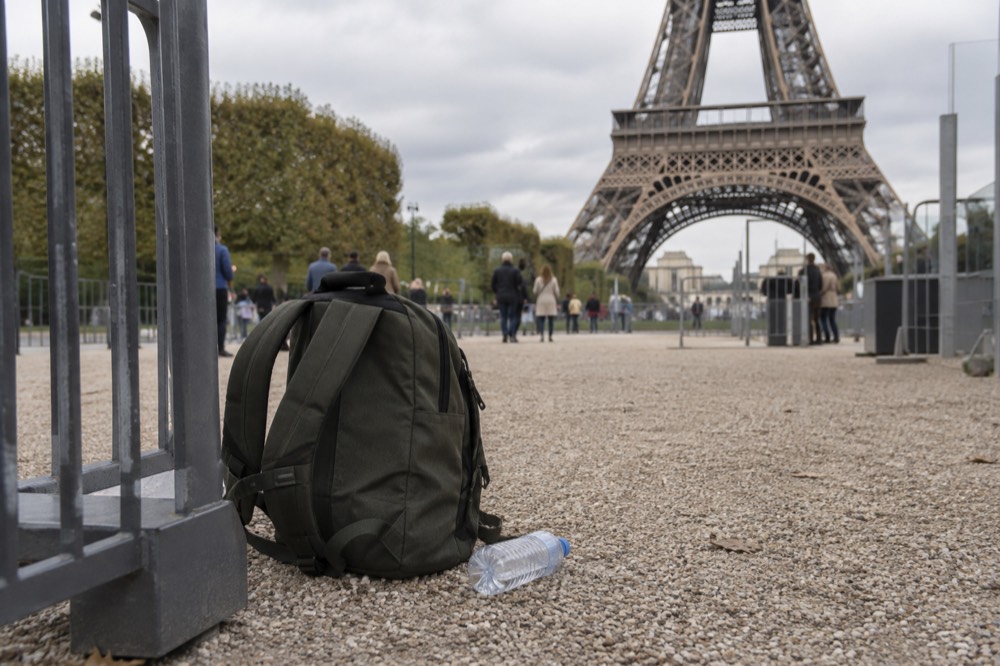
The security line also explains a timing trap. The queues at the tower's perimeter can be long in high season, and standing in one for an hour with a suitcase you already know will be refused is the worst possible use of a Paris afternoon. If you are arriving from a checkout or a station with luggage, the sequence that works is storage first, then the tower, with the bag already dropped before you join any line. The nearest Radical Storage points open from 07:30, earlier than most tower visits begin, so the order is rarely a constraint.
It is worth knowing what French law says about the alternative of simply leaving a bag somewhere unattended, because the instinct exists and the penalties are real. The law of 28 April 2025 on transport security created tiered fixed penalties for abandoned baggage across SNCF and RATP networks: 72 EUR rising to 450 EUR for involuntary abandonment, 150 EUR rising to 750 EUR where a bag carries no label, and 180 EUR rising to 1,500 EUR for manifest voluntary abandonment. That law governs stations and public transport rather than monument lawns, but the direction of travel is unmistakable. An unattended bag in a Paris station triggers the Vigipirate protocol, and SNCF states that dealing with one takes 19 minutes on average. Nobody should plan on parking a suitcase against a tree on the Champ de Mars.
The Nine Storage Points Within Reach Of The Champ de Mars
The Radical Storage cluster around the Eiffel Tower lists nine storage points, rates 4.8 across 1,559 traveller reviews, and opens as early as 07:30 with the latest closing at 23:59. The rate is EUR 3.90 per bag per day plus a EUR 1.99 per-bag checkout fee, so one bag for one day is EUR 5.89 in arithmetic on the network's two published figures.
This is the cluster this site points tower visitors to, and its numbers are worth reading carefully because they are better than most of Paris. A 4.8 rating across 1,559 reviews, spread over nine published points, is the strongest review profile of any landmark cluster on this site, ahead of both the Arc de Triomphe cluster at 4.73 and the Louvre cluster at 4.8 from a similar review base. Seven points is a real spread for a single monument: it means early openings and late closings are distributed across different shops and hotels rather than concentrated in one counter's hours.
The hours point deserves emphasis, because the storage industry's marketing is not honest about it. Radical Storage's own page titles for Paris areas include an "open 24/7" template string, and it is not true of any Paris point. The tower cluster's earliest opening is 07:30 and its latest closing is 23:59, and each point's hours come from that point's own card. If your plan depends on a 06:00 drop or a midnight pickup, check the specific point's published hours before booking rather than trusting any network's headline claim. The tower itself opens earlier than its first lifts in high season, and the last entry is long before 23:59, so the cluster's closing hours comfortably cover a normal visit.
What you are actually handing your bag to matters too. These are not lockers. They are ordinary businesses, hotels, shops and cafes, holding bags behind a counter, which is why there is no size or weight limit published for the network in Paris: a shop counter does not have a locker interior to constrain. The network's guarantee is advertised at EUR 10,000, but the binding terms cap payment at EUR 3,000 per claim and state plainly that the guarantee is not an offer to insure your property and does not constitute a contract of insurance. Both figures belong in the same sentence, always. A reader deciding whether to leave a laptop in the bag needs the cap, not the headline.
If you are weighing this cluster against the alternatives elsewhere in the city, the honest comparison table looks like this:
| Cluster | Points | Rating | Reviews | Earliest open | Latest close |
|---|---|---|---|---|---|
| Eiffel Tower | 7 | 4.8 | 1,559 | 07:30 | 23:59 |
| Arc de Triomphe | 6 | 4.73 | 1,327 | 09:00 | 23:59 |
| Porte Maillot | 1 | 4.68 | 518 | 08:30 | 21:00 |
| Louvre | 6 | 4.8 | 3,152 | 07:00 | 22:00 |
The pattern is consistent: landmark clusters near the river open early and close late because the businesses around them serve tourists all day. The single-point Porte Maillot cluster is the outlier, and it exists for a different reason, which we come to below.
What Luggage Storage Near The Eiffel Tower Costs
Expect EUR 3.90 per bag per day at every tower-area point, plus a EUR 1.99 per-bag fee that appears at checkout, making one bag for one day EUR 5.89 as arithmetic on the network's two published figures. The EUR 1.90 figure Radical Storage advertises is a global marketing floor, not a Paris price: across 329 Paris location cards counted in this site's research, 316 showed EUR 3.90.
The gap between the advertised price and the real one is the single most important thing to understand about Paris storage pricing, and almost every page on the internet gets it wrong. Radical Storage markets "from EUR 1.90 per day" across its Paris pages. In the card-by-card count behind this site, that price appeared on 10 of 329 Paris cards, all of them in the Bercy cluster, with three more cards at EUR 5 and the remaining 316 at EUR 3.90. Writing "luggage storage in Paris from EUR 1.90 a day" as a plain fact would understate what a tower visitor actually pays by roughly half. The honest sentence is: the network advertises from EUR 1.90, and the rate at every point near the Eiffel Tower is EUR 3.90.
The checkout fee is the second half of the story. It does not appear on the Paris landing page at all, because it is a checkout-stage charge rather than a listed price, which is exactly where a reader meets it. It is charged once per bag and does not scale with the number of days, which produces a slightly counterintuitive cost curve: the fee hurts most on a short booking and matters least on a long one.
| Booking | Arithmetic | Total |
|---|---|---|
| 1 bag, 1 day | EUR 3.90 + EUR 1.99 | EUR 5.89 |
| 1 bag, 3 days | EUR 3.90 x 3 + EUR 1.99 | EUR 13.69 |
| 2 bags, 1 day | EUR 3.90 x 2 + EUR 1.99 x 2 | EUR 11.78 |
| 2 bags, 3 days | EUR 3.90 x 6 + EUR 1.99 x 2 | EUR 27.38 |
These totals are arithmetic on the network's two published figures, not observed checkout receipts, and they are presented as such. The cancellation policy softens the risk of booking ahead: cancellation is free at any time before the scheduled check-in, with a full refund, so reserving a point before you arrive costs nothing if your plans shift.
For readers whose real question is cost across the whole city, this site keeps a full breakdown in what luggage storage costs in Paris, including how the networks compare with the official station consignes. The short version for the tower area: there is no cheaper bookable point closer than these, and the genuinely cheaper option, the SNCF locker, is a train ride away.
Is There A Self-Service Locker Near The Eiffel Tower?
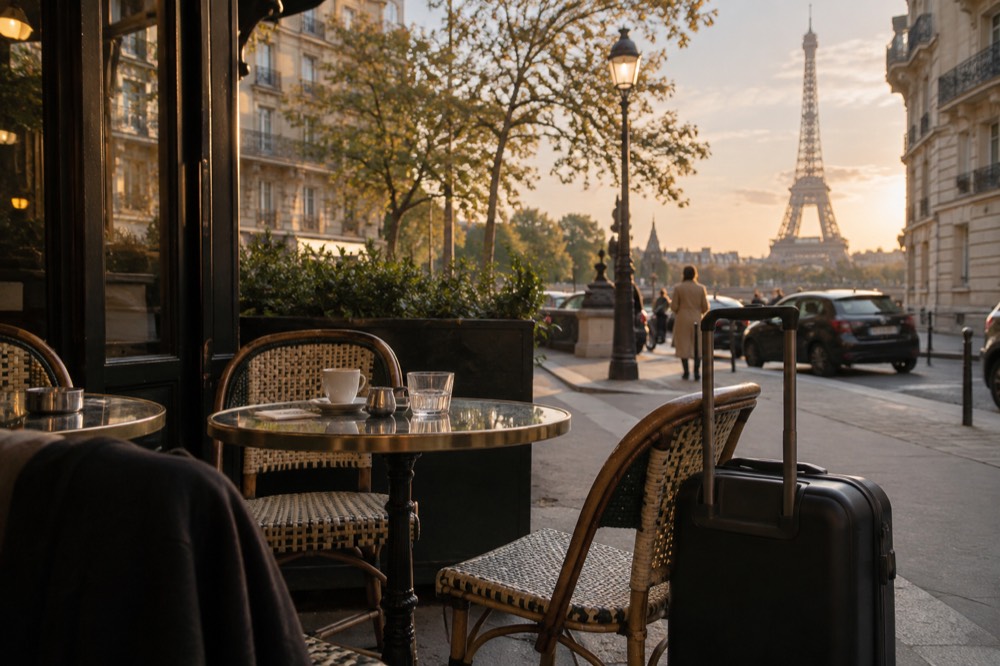
No automated locker site operates near the Eiffel Tower. The automated locker operators in Paris concentrate on the mainline stations and the business districts, and the tower's own neighbourhood, residential Passy and Gros-Caillou, has none. Near the Champ de Mars the choice is a staffed Radical Storage counter or nothing bookable.
This question gets searched often enough to answer directly, and the answer is a clean negative. The automated locker model, banks of self-service casiers you pay and walk away from, exists in Paris at the SNCF stations and at a small number of independent sites, but none of them is within practical walking distance of the Champ de Mars. The 7th arrondissement around the tower is largely residential embassies and ministries, a district that does not generate the all-day bag-drop demand a locker bank needs.
The nearest official lockers are at Gare Montparnasse, which is the closest mainline station to the tower with a consigne. SNCF's tariff there is EUR 5.50 for a small locker and EUR 9.50 for a large one per indivisible 24 hours, with EUR 5 per additional 24-hour period, payment by bank card only, open 07:00 to 22:00 daily. That is a genuine option if your day already runs through Montparnasse, and this site's guide to Paris train station luggage storage covers every station consigne in the city with prices, hours and payment quirks.
But it is not a tower answer. Montparnasse is not a short walk from the Champ de Mars, and dragging a suitcase onto the Metro between the two to save roughly nothing, once you compare a EUR 5.50 small locker against EUR 5.89 for a bag at the tower cluster, is a bad trade of money for effort. The locker only wins clearly on longer stays, and even then only if your route passes the station anyway.
The honest summary for the tower neighbourhood is that the staffed counter is the product. That is not a deficiency: a staffed point has no locker-interior size limit, takes bags of any dimensions, and can hold a bag past midnight at some locations, none of which a locker bank offers. What the staffed point does not offer is anonymity. You are handing your bag to a person at a business, which is why the network's guarantee terms, and the practical steps that make a claim possible, matter more than they would at a machine.
The claim procedure is worth knowing before you drop a bag anywhere. Radical Storage's terms require notification of any loss or damage within seven days of discovering it, with a response within three working days and a ten-day window to pursue an eligible claim. Critically, clause 9.8 excludes any booking for which the claimant has not supplied a signed list of individually listed items with their estimated values. In plain terms: photograph your bag's contents and write down what is inside, with values, before you hand it over, because a claim without that list is excluded by the contract. Theft claims additionally require a police report within 48 hours of becoming aware of the theft. These are the network's own published terms, and no competitor page states them.
The Cheapest Way To Store A Bag Near The Eiffel Tower
For a single day near the tower, the cheapest realistic option is a Radical Storage point at EUR 5.89 all-in for one bag, because the tower cluster has no cheaper bookable alternative and the nearest official locker costs EUR 5.50 before you add the cost and effort of reaching it. For multiple bags or multiple days, the arithmetic shifts and the station locker can win.
Cheapest depends on the shape of the booking, so it is worth being precise. One bag, one day, near the tower: EUR 5.89 at a tower-area point, with no travel, free cancellation and no size limit. One small bag, one day, at Montparnasse: EUR 5.50 in a locker, plus a Metro fare each way and the constraint that your bag must fit a 433 x 347 x 824 mm interior. The tower point wins on every axis except the raw euro figure, and the euro gap is 39 cents.
Scale the booking and the locker begins to win. Three days, one small bag, at a station consigne: EUR 5.50 plus two further 24-hour periods at EUR 5 each, so EUR 15.50. Three days, one bag, at a tower point: EUR 3.90 x 3 plus the EUR 1.99 fee, so EUR 13.69. Here the network is cheaper, because its day rate is lower and its fee is charged once. For two bags the comparison tilts again, since the network's fee is per bag while a second locker is a second locker tariff. There is no single winner; there is only the arithmetic for your booking, which is why this site publishes it rather than a slogan.
Two warnings belong in any honest cheapest-option answer. First, the SNCF stations themselves say their consignes "meet with great success and can periodically be full", and can be temporarily closed for works, so a locker is never a guaranteed option on arrival. Second, Gare de Lyon's consigne is being refitted during September 2026 to install a bank of lockers equipped exclusively for bank-card payment, a change in progress rather than a completed switch, so payment norms at the stations are in flux and worth checking before you rely on coins or card specifically.
Combining The Tower With The Arc De Triomphe
The Arc de Triomphe cluster adds eleven more Radical Storage points along the same westward axis as the tower, rating 4.73 across 1,327 reviews, opening from 09:00 and closing at 23:59. For a day that takes in both monuments, a single drop near either end of that axis covers the whole walk.
The Arc is the natural second act for many tower itineraries, and it shares the tower's bag problem. The Arc de Triomphe publishes a maximum luggage size of 40 x 40 x 20 cm, has no left-luggage office of its own, and screens bags at entry, so a suitcase is just as unwelcome there as at the tower. What the Arc adds is a second storage cluster, nine points strong, sitting roughly along the axis between the two monuments that runs down through Passy and across the river.
The planning move this enables is the single drop. Rather than storing near the tower, retrieving, and re-storing near the Arc, a traveller can leave the bag at whichever cluster better matches their onward journey and walk or ride between the monuments hands-free. Both clusters close at 23:59, so a late dinner on the Champs-Elysees after an evening tower visit still ends within pickup hours. The Arc cluster opens later than the tower cluster, 09:00 against 07:30, which only matters for very early starts.
Readers planning several monuments in one bag-free day should also read this site's guide to Paris museum and landmark bag rules, which sets out the cloakroom situation and size caps at every major venue, from the Louvre's free lockers to the Catacombs' 40 x 30 x 20 cm limit, the tightest in the city.
Porte Maillot: The Airport-Direction Option
Porte Maillot has a single Radical Storage point, rating 4.68 across 518 reviews, open 08:30 to 21:00, and its value is positional: it sits on the western axis toward the airports and La Defense rather than near any monument. For a tower visit that ends in an airport transfer, it is the drop that keeps you from carrying the bag at all.
A one-point cluster is unusual on this site, and it exists because Porte Maillot is a transport node rather than a sightseeing district. The RER and bus connections that serve the airports run through the west of the city, and a storage point there lets a traveller drop a bag on the way out rather than carting it through a final morning of sightseeing. The trade-offs are the obvious ones for a single point: no alternative if it is full or closed, hours of 08:30 to 21:00 that rule out late pickups, and a review base of 518 that is thinner than the landmark clusters.
Whether it beats the tower cluster depends entirely on your exit route. If your last evening ends near the Champ de Mars and your flight leaves the next morning, storing at the tower cluster and retrieving before its 23:59 close, or the next day from 07:30, is simpler. If you are leaving Paris the same evening via the western axis, the Porte Maillot drop saves a backtracking leg. This site's guide to getting into Paris from CDG and Orly with bags covers the transfer side of that decision.
One airport fact belongs here because it surprises people: Radical Storage has no storage point at Charles de Gaulle or at Orly. Both airport pages exist on the network's site but carry zero inventory, and this site says so plainly rather than implying a bag can be dropped at either terminal. The airports do have their own operator-run left-luggage desks, run by Bagages du Monde, open 07:00 to 21:00 seven days a week, with an indicative price list from 3 EUR per hour or 10 EUR per day for carry-on items up to 20 EUR per day for large luggage, and a two-hour minimum. Those are the operator's own indicative rates rather than an observed checkout, and they are a different, hourly product from anything the city networks sell.
Common Questions About Eiffel Tower Luggage Storage
Does The Eiffel Tower Offer Luggage Storage?
No. The tower has no left-luggage office, no cloakroom and no lockers, in the monument or near it, and the operator states this on its own visitor pages. A suitcase cannot be checked anywhere on site. The working answer is a storage point within reach of the Champ de Mars, such as the seven-point Radical Storage cluster at EUR 3.90 per bag per day plus the EUR 1.99 per-bag checkout fee.
Can I bring a backpack to the Eiffel Tower?
Small day packs and handbags generally pass the security check. The tower enforces its size limit with a physical gauge at the checkpoints rather than a published centimetre figure, so there is no official maximum in writing. Anything that reads as travel luggage, a cabin suitcase, a wheelie bag or a large backpack, will be refused, and there is nowhere on site to store it once refused.
How much does luggage storage near the Eiffel Tower cost?
EUR 3.90 per bag per day at every tower-area Radical Storage point, plus a EUR 1.99 per-bag fee added at checkout, so one bag for one day is EUR 5.89 in arithmetic on the network's two published figures. The EUR 1.90 the network advertises is a global marketing floor that appears on only 10 of 329 Paris location cards, none of them near the tower.
Is there an automated locker near the Eiffel Tower?
No. The automated locker operators in Paris concentrate on the mainline stations and business districts, and the tower's residential neighbourhood has none. The nearest official lockers are at Gare Montparnasse, EUR 5.50 small and EUR 9.50 large per 24 hours, bank card only, open 07:00 to 22:00, which only makes sense if your day already passes through that station.
Is my bag insured when I store it near the Eiffel Tower?
No storage network in Paris offers insurance, and Radical Storage's own terms state its guarantee is not a contract of insurance. The guarantee is advertised at EUR 10,000 but the binding terms cap payment at EUR 3,000 per claim. Claims require notification within seven days, a signed itemised list of the bag's contents with values, and a police report within 48 hours for theft, so photograph and list your contents before handing the bag over.
What time do storage points near the Eiffel Tower open and close?
Across the seven-point tower cluster, the earliest opening is 07:30 and the latest closing is 23:59, but hours vary by individual point and come from each point's own card. No Paris storage point is open around the clock despite network marketing that suggests otherwise, so check the specific point's published hours before booking a very early drop or a very late pickup.
For everything else about dropping a bag in this city, Luggage Storage in Paris keeps the full directory of storage points by station, district and landmark, with prices, hours and the honest comparisons behind every recommendation.